
As summer fades and cooler temperatures arrive in Southwest Michigan, many homeowners wonder whether they should cover their air conditioner for winter.
In most cases, a full cover isn’t necessary. Traditional outdoor air conditioning units are designed to withstand snow, rain, and freezing temperatures. However, covering them improperly can trap moisture, attract small animals, and potentially cause damage. Knowing how to protect your unit can help keep it in good condition for the next cooling season.
Are Air Conditioners Designed to Withstand Winter Weather?
Yes. Most modern outdoor AC condensers are built to remain outside year-round. Their durable materials and weather-resistant components are designed to handle changing seasonal conditions.
In Kalamazoo and throughout Southwest Michigan, outdoor HVAC equipment faces snow, ice, freezing rain, and fluctuating temperatures. Normal winter weather typically won’t damage a properly installed unit, but keeping the surrounding area clear and ensuring proper drainage are still important.
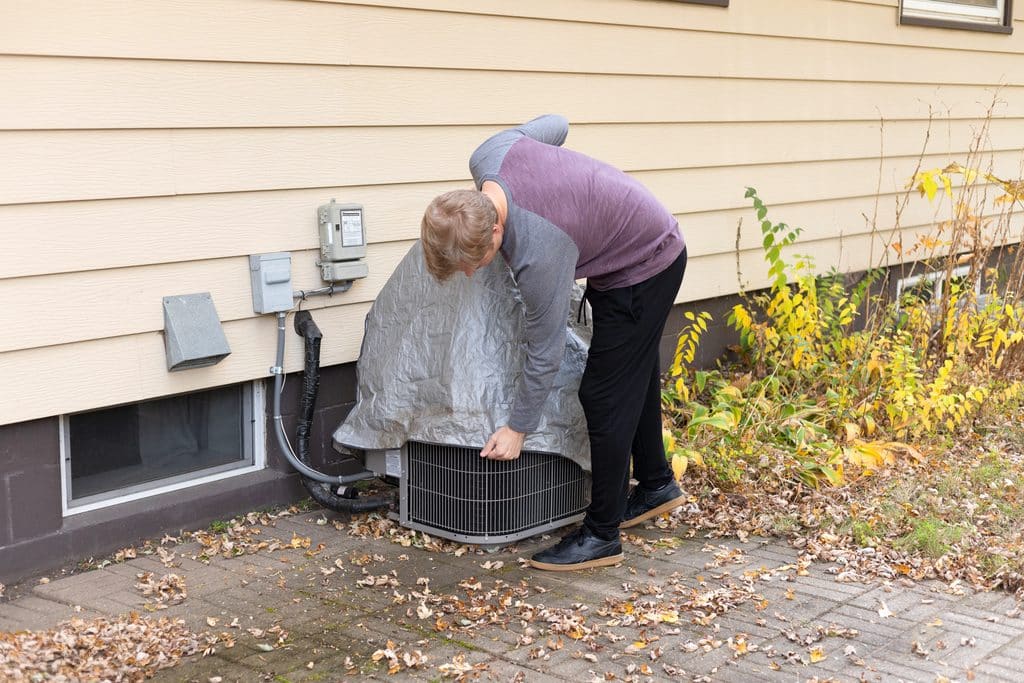
Is It Necessary to Cover Your Air Conditioner During Winter?
In most cases, a traditional outdoor air conditioning unit can remain uncovered during winter. These units are designed to withstand normal outdoor weather, including rain and snow.
If your condenser is exposed to falling leaves, twigs, or debris from nearby trees, a manufacturer-approved top cover may help keep the unit clear. Avoid wrapping the entire unit in plastic or another material that can trap moisture.
Before covering your equipment, check the manufacturer’s recommendations or ask an HVAC professional what is appropriate for your system. If your home has a heat pump, remember that it needs to operate during colder weather and should not be treated like a traditional AC unit that sits idle all winter.
Benefits of Covering Your Air Conditioner the Right Way
Keeps Leaves and Debris Out
Leaves, pine needles, twigs, and acorns can collect inside the top of your condenser during fall. A top cover can help reduce debris buildup and make spring cleanup easier.
Helps Prevent Damage from Falling Ice
If your unit sits beneath icicles or a roof valley where heavy ice may fall, a protective top cover may help protect exposed components. However, this isn’t a concern for every home.
Makes Spring Cleanup Easier
Keeping debris out of your condenser can simplify seasonal cleaning before you start using your air conditioner again.
When Covering Your Air Conditioner Can Cause Problems
Moisture Can Become Trapped
Full covers can restrict airflow and trap condensation, potentially encouraging rust and corrosion.
Small Animals May Seek Shelter Inside
Mice, chipmunks, and squirrels may use covered equipment as shelter. These animals can chew wiring and cause costly damage.
Mold and Mildew Can Develop
Poor ventilation beneath a full cover can create damp conditions that encourage mold and mildew growth.
Remember to Remove the Cover Before Spring
Running your AC while it’s covered can restrict airflow and interfere with proper operation. If you use a cover, remember to remove it before starting the system in spring.
What’s the Best Way to Protect Your Air Conditioner During Winter?
A few simple steps can help protect your outdoor condenser:
- Remove leaves and debris around the unit.
- Trim nearby shrubs and branches.
- Keep gutters and downspouts from draining directly onto the equipment.
- Use a breathable top cover if needed.
- Avoid enclosing the entire unit in plastic.
- Keep snow and other obstructions away from the unit according to manufacturer recommendations.
If you’re unsure whether your condenser needs extra protection, an HVAC professional can help you determine the best approach.
Should You Shut Down Your Air Conditioner for Winter?
Most thermostats stop calling for cooling when temperatures drop. For some traditional AC systems, the manufacturer or an HVAC technician may recommend switching off power at the outdoor disconnect to help prevent accidental operation during unexpected warm weather.
Always follow the equipment manufacturer’s instructions before disconnecting power. Heat pumps operate differently from traditional air conditioners and generally need to remain powered during winter. If you’re unsure what your system requires, consult an HVAC professional.
Fall Is a Great Time to Get Your Heating System Ready for Winter
As cooling season ends, your furnace becomes essential for keeping your home comfortable. Scheduling annual furnace maintenance in the fall allows an HVAC technician to inspect components, check system operation, and identify potential problems before temperatures drop.
Read more about why you should schedule a furnace tune-up before winter to learn how preventative maintenance can help prepare your heating system.
It’s also a good time to address unusual furnace behavior before the heating season gets underway. If you notice water around your furnace, it’s worth having it inspected by an HVAC professional to determine the cause.
Other HVAC Maintenance Tips Before Winter Arrives
Along with preparing your outdoor unit, take time to check a few other parts of your home’s heating system before colder weather settles in:
- Replace your furnace air filter.
- Test your thermostat.
- Clear debris around outdoor equipment.
- Test carbon monoxide detectors.
- Inspect vents and registers for obstructions.
- Listen for unusual furnace noises when turning on the heat.
- Schedule professional heating maintenance.
Addressing potential issues early can help reduce the risk of unexpected problems during the heating season.
Preparing Your Kalamazoo Home for a Michigan Winter
Homeowners in Kalamazoo, Portage, Mattawan, Oshtemo, Texas Corners, Schoolcraft, Richland, Paw Paw, Lawton, Vicksburg, Galesburg, and Parchment know that Michigan winters can bring heavy snow, ice storms, and freezing temperatures.
Keep outdoor equipment clear of debris and excessive snow, check drainage around your condenser, and make sure your heating system is ready for extended cold weather. These simple steps can help protect your HVAC equipment throughout the season.
Frequently Asked Questions
Is It Safe to Cover My Air Conditioner With a Tarp?
A full tarp cover is generally unnecessary because it can trap moisture. A breathable top cover is a better option if you need protection from debris.
Can Snow Damage My Outdoor Air Conditioner?
Normal snowfall usually isn’t a problem for outdoor condensers. Heavy falling ice and excessive snow buildup around the unit may cause damage.
Is It Okay to Leave My AC Uncovered All Winter?
Yes. Most traditional outdoor AC units are designed to remain uncovered throughout the year.
What’s the Best Cover for an Outdoor AC Unit?
A breathable top cover can help keep leaves and debris out without enclosing the entire unit.
Should I Clean My Air Conditioner Before Winter?
Yes. Remove leaves and debris from around the condenser and keep the surrounding area clear.
When Should I Schedule AC Maintenance?
Spring is generally ideal for air conditioning maintenance, while fall is the best time to prepare your furnace for winter. Address AC problems as soon as they arise rather than waiting for spring.
Schedule HVAC Maintenance Before Winter Arrives
Taking steps to protect your air conditioner and maintain your furnace can help prevent avoidable issues as the seasons change.
As a family-owned company with more than 25 years of experience, our team provides heating and cooling expertise, reliable workmanship, and superior customer service to homeowners throughout Southwest Michigan.
Explore our services and contact us to schedule HVAC maintenance or call (269) 343-5381 before winter arrives.
Let’s Work Together
At All American Plumbing Heating & Cooling, nothing excites us more than being able to help our friends and neighbors in our local community.
Address
Kalamazoo, MI 49009
Phone
(269) 343-5381